 Estrelu
The 2 to 1 nap transition: signs, timing and a 2-week plan
The 2 to 1 nap transition is when your toddler stops needing a morning and an afternoon nap and moves to one longer nap, usually after lunch. It most often happens in the second year, but every child's timing is different. Below: signs of readiness, a two-week plan, and how to handle bedtime.
When do toddlers drop to one nap?
There is no exact age, so follow your child rather than the calendar. Sydney Children's Hospitals Network says a toddler's two naps will likely reduce to one between 12 and 18 months (SCHN). Nemours KidsHealth adds that young toddlers may still take two naps, but most drop to one by 18 months (KidsHealth).
Total sleep stays about the same. The American Academy of Sleep Medicine recommends 11 to 14 hours per 24 hours for children 1 to 2 years old, including naps (AASM, 2016). What changes is how that sleep is split: night sleep plus one bigger nap.
Signs your toddler is ready for one nap
Look for a pattern, not a single day. Parents often notice these signs, and if they hold for a week or two, the switch may be close:
- The morning nap becomes a fight. Your child plays or chats in the crib much longer than usual, or doesn't fall asleep at all.
- The second nap disappears. After a good morning nap, the afternoon nap won't happen.
- Nights shift. With two naps, bedtime drifts later, or early wake-ups start.
- Awake time stretches. Your toddler stays happy and calm for longer before getting tired.
These signs are not a rule. Teething, illness, travel or a new skill can cause a rough week. If your child is sick or cutting teeth, it is usually easier to wait.
First, if a nap gets skipped for a day or two, don't panic.
Why the switch feels hard
During the transition, two naps are too many and one is not quite enough yet. That is why you may see a toddler nodding off at lunch and melting down at dinner. It doesn't mean you are doing something wrong. Their body is adjusting, and that takes time.
A gradual shift usually works better than cutting the morning nap overnight. The plan below is one practical approach, not a medical protocol. Adjust it to your child.
A 2-week plan for the 2 to 1 nap transition
The goal is to push the morning nap toward midday until it becomes the only nap. The times below are examples, starting from a morning nap around 9:30.
Days 1–3: push the morning nap 15–30 minutes later
Put your toddler down a little later than usual, for example 10:00 instead of 9:30. Keep the afternoon nap for now, but make it shorter or earlier so bedtime doesn't slide.
Days 4–7: later morning nap, shorter afternoon nap
Keep moving the morning nap: 10:30, then 11:00. If there's no room left for a second nap, swap it for quiet time: books, calm play, a stroller walk. The HSE in Ireland advises that babies over 9 months should not sleep after 3:30 p.m. (HSE), so keep any late catnap short.
Days 8–11: one nap around midday
The morning nap has become a midday nap, around 11:30 to 12:30. Serve lunch a bit earlier so your toddler goes down with a full tummy. If they are falling apart by 11, put them down earlier. That is not a step back.
Days 12–14: settle in
Keep the one nap at roughly the same time each day. After a bad night or a vaccine day, offer two naps if needed. One-nap and two-nap days can alternate for a while.
What to do about bedtime
Bedtime is the weak spot. With only one nap, the stretch from waking up to bedtime gets long, and toddlers get more tired by evening.
Your main tool is an earlier bedtime. KidsHealth suggests that if a child refuses a nap, you can set an earlier bedtime to help meet their sleep needs (KidsHealth). Many families move bedtime earlier during the switch, then ease it back.
Other things that help in the evening:
- A familiar routine. Bath, book and song in the same order signal that sleep is coming. Sydney Children's Hospitals Network notes that a regular, consistent bedtime routine can help children prepare for sleep (SCHN).
- A calm last hour. No rough play, no bright screens.
- An early bedtime is fine. During the transition, an early lights-out is a tool, not a failure.
Common bumps along the way
Car or stroller catnaps before lunch. Ten minutes in the car seat can wipe out the midday nap. During these weeks, try to plan errands after the nap or right before it.
Short naps at first. The single nap may be short in the first days. Give it time. A dark room helps: the HSE suggests keeping the room dark during naps (HSE).
Very early wake-ups. These often point to an overtired toddler. Try moving bedtime a little earlier for a few days.
Daycare. If the daycare room has one nap at a set time, your child may switch faster there than at home. On weekends, keeping the same nap time and an earlier bedtime on weekdays can help.
How Estrelu helps with the switch
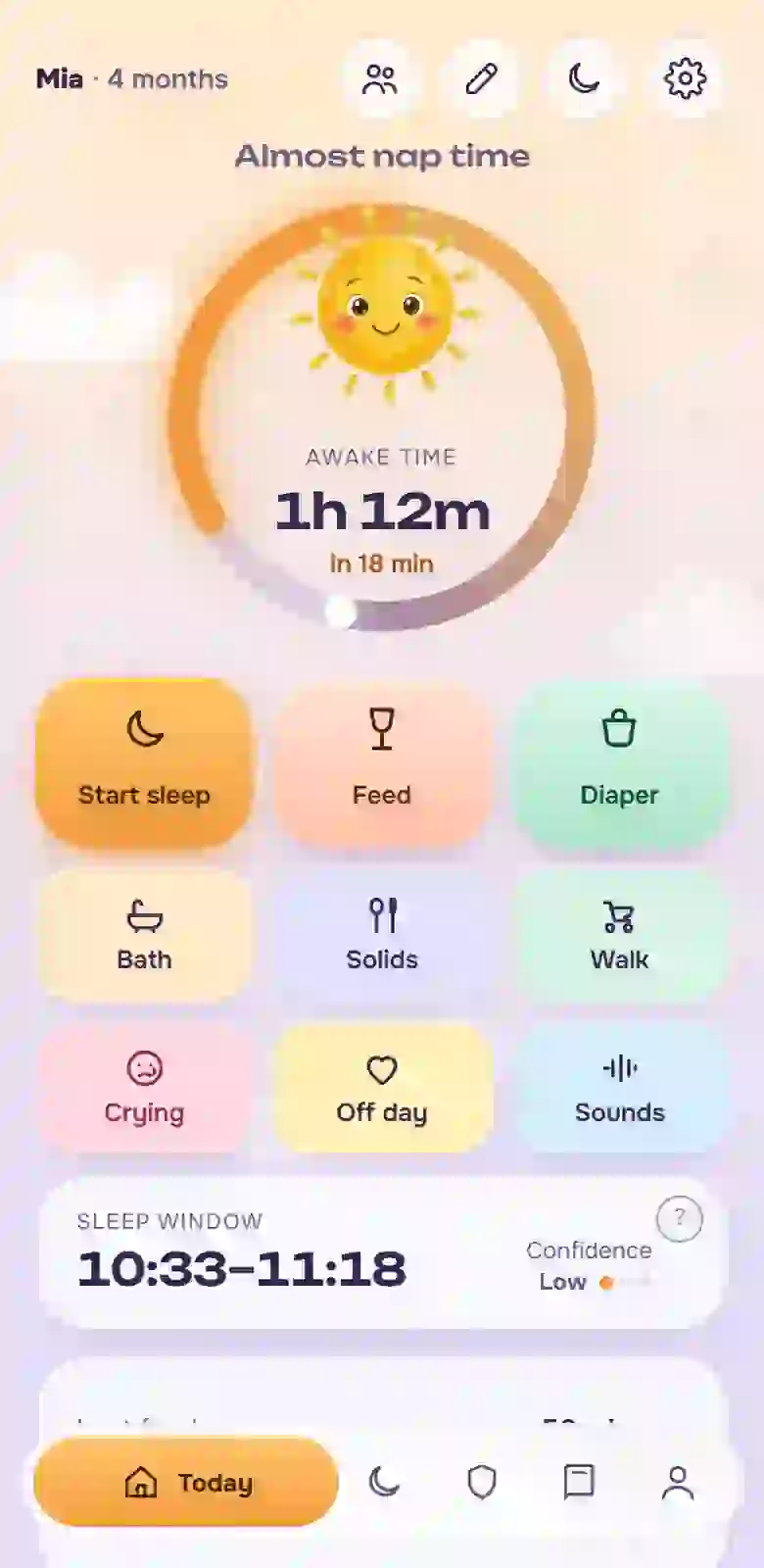
Estrelu has a "Fewer naps" helper. It looks at your toddler's own logs and suggests how to shift sleep step by step. The next nap is shown as a range with a confidence level (low, medium or high), and you can tap it to see what the estimate is based on.
With "Day plan and 'what if,'" you can check what happens to bedtime if you move the nap by half an hour. If your child is sick or teething, mark an "Off day": the forecast doesn't learn from those days and shows a wider range. The caregiver handoff tells a grandparent or sitter when your toddler woke up and when to expect the next nap.
Read more on the sleep tracker page, or get a quick estimate with the wake window calculator.
Every child's timeline is different; nap transitions are developmental, not moral victories. Don't judge your child by what your friend's child is doing.
When to call your doctor
The move to one nap is a usual stage, but talk to your pediatrician if:
- your toddler is very sleepy during the day, hard to wake or unusually floppy;
- they snore loudly, pause in their breathing or work hard to breathe during sleep;
- sleep and mood don't settle for several weeks after the switch, and your child seems irritable most of the time;
- sleep changes come with fever, refusing food or drink, or other signs of illness.
Before the visit, the doctor visit summary pulls together sleep, feeds and notes for 7, 14 or 30 days.
Estrelu is not a medical device. It does not diagnose, calculate doses or replace advice from your doctor. This page is for general information only.
Frequently asked questions
- What age do babies go from 2 naps to 1?
- Most often during the second year. Sydney Children's Hospitals Network says two naps will likely reduce to one between 12 and 18 months, and KidsHealth notes most toddlers drop to one nap by 18 months. Every child's timing is different.
- How much sleep does a 1- to 2-year-old need?
- The American Academy of Sleep Medicine (2016) recommends 11 to 14 hours per 24 hours for children 1 to 2 years old, including naps. It is a general range, not a target for every single day.
- What if my toddler can't make it to the midday nap?
- That is common during the switch. Move the nap a little earlier for now, and on very hard days go back to two naps. An earlier bedtime helps on those days.
- How long does the 2 to 1 nap transition take?
- There is no fixed timeline. Many families plan for a couple of weeks, and some toddlers go back and forth between one-nap and two-nap days for a while.
Sources
- AASM 2016. Recommended amount of sleep for pediatric populations jcsm.aasm.org
- Nemours KidsHealth. Naps kidshealth.org
- Sydney Children's Hospitals Network. Sleep recommendations for toddlers (1–3 years) schn.health.nsw.gov.au
- HSE (Ireland). Naps for babies and toddlers www2.hse.ie
- Craig Canapari MD. What to do about a nap strike drcraigcanapari.com
- Craig Canapari MD. Why some kids stop napping earlier than others drcraigcanapari.com
Try Estrelu
Five days free, no card asked.
Read next
- Baby Sleep Tracker App with Nap PredictionEstrelu predicts your baby's next nap as a time range with a confidence level and plans today and tomorrow. Works offline in your browser, no app store, no ads.
- Wake window calculatorEnter your baby's birth date and wake-up time to see when the next nap may fit. Plus a wake window chart by age, newborn to 3, and where the numbers come from.
- Baby Log for Nanny and Caregiver HandoffsHand off to a nanny, partner or grandparent with one text: last feed, time awake and the next nap window. Estrelu runs in your browser, offline, with no ads.
- Leap and Teething Tracker for Fussy WeeksMark teething, illness, leaps and shots as off days so the sleep forecast stays honest, and see when a fussy week may come. Works offline in your browser.