 Estrelu
How many wet diapers should a newborn have? A day-by-day guide
Wet diapers are one of the simplest signs that your baby is getting enough milk. According to the NHS, a newborn usually has 2 to 3 wet diapers in the first 48 hours, and from day 5 at least 6 heavy wet diapers a day. Below: what to expect each day, what dirty diapers tell you and when to call the doctor.
Wet diapers by day of life
The number of wet diapers goes up as your milk comes in. You can see it within the first week.
The UK's NHS gives two guides. In the first 48 hours, your baby is likely to have only 2 to 3 wet diapers. From day 5, they get more frequent: at least 6 heavy wet diapers every 24 hours (NHS).
Ireland's health service, the HSE, breaks down the first week for breastfed babies (HSE):
| Day of life | Wet diapers | Poop |
|---|---|---|
| Day 1 | 1 a day | Once, black |
| Day 2 | 2 | Twice, black |
| Day 3 | 3 | 3 times, black or green |
| Day 4 | 4 | 3 to 4 times, green or yellow |
| Day 5 | 5 | 3 to 4 times, should turn yellow |
| Day 6 to 6 weeks | 6 or more | 3 to 8 times, yellow, seedy, runny or soft |
These are guides, not strict numbers. Every baby has their own rhythm, and one drier stretch doesn't mean much on its own. Look at the whole day and the last few days.
What counts as a "heavy" wet diaper
Today's disposable diapers soak up so well that it can be hard to tell if they're wet. The NHS suggests a simple test: pour 2 to 4 tablespoons of water into a clean diaper. That's how a properly wet diaper feels (NHS).
Check the color of the pee too. According to the HSE, from 6 days to 6 weeks your baby's pee should be pale yellow or clear (HSE).
What dirty diapers tell you
Poop changes with feeding in the first days too. It starts black and sticky, called meconium. Then it turns greenish and, by about day 5, yellow (HSE).
The NHS adds a guide for breastfed babies: from day 4 and in the first weeks, at least 2 soft yellow poops a day, each about the size of a £2 coin (NHS).
Other signs your baby is getting enough milk
Diapers aren't the only sign. The NHS lists others (NHS):
- after the first 3 to 4 days, your baby gains weight steadily; losing a little weight in the first 3 to 4 days is common;
- you can hear and see your baby swallowing during feeds;
- after a feed, their mouth looks moist and they seem content;
- when awake, they look healthy and alert.
According to the NHS, most babies are back to their birth weight or above it by 3 weeks (NHS). For how often to feed, the CDC says breastfed newborns usually feed 8 to 12 times in 24 hours (CDC).
How to count diapers without the effort
In the first weeks the days blur together, and counting at night is especially hard. It's easier to log each diaper right away than to remember in the evening.
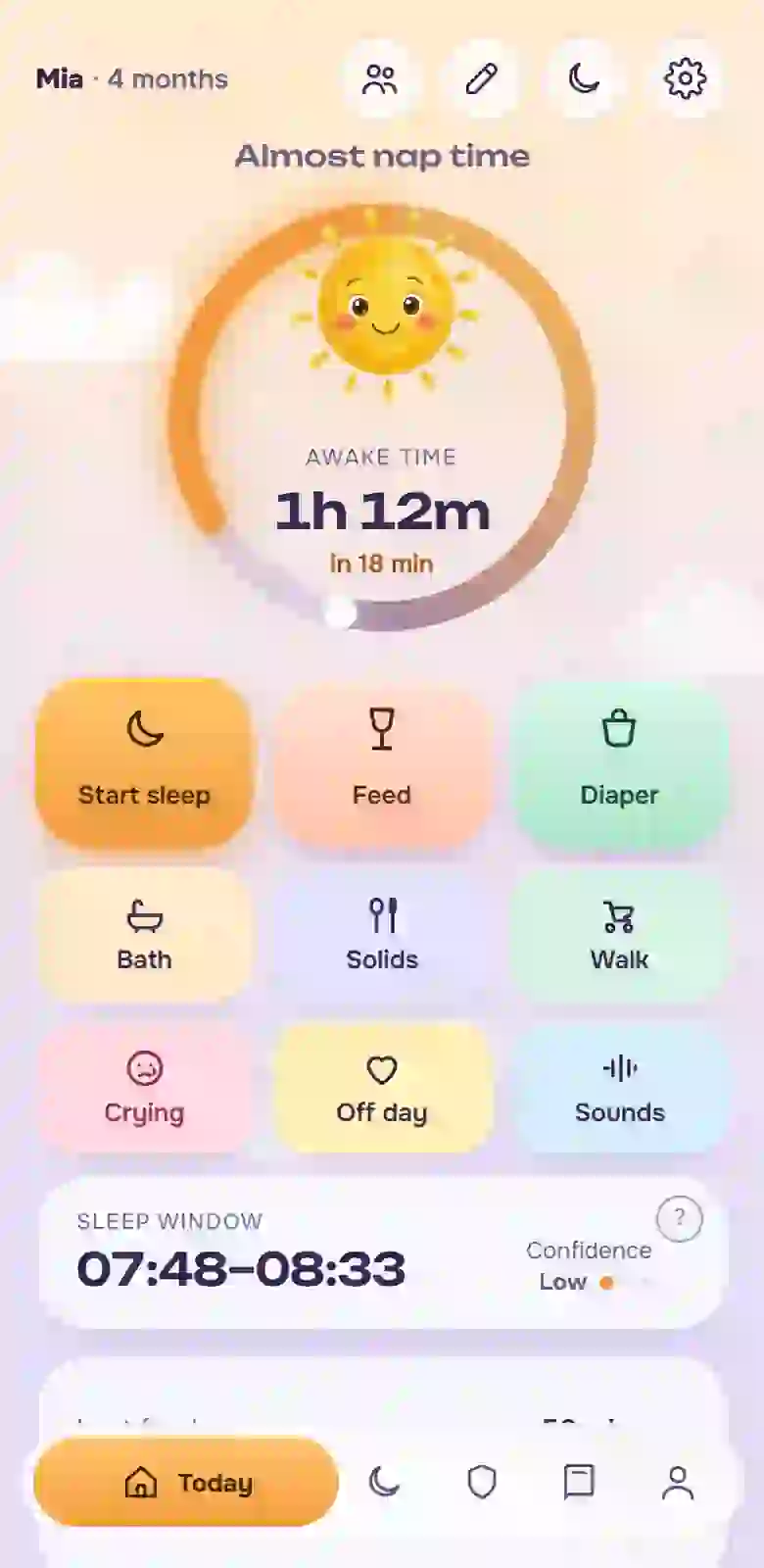
In the Estrelu feeding tracker you log a diaper with one tap: wet, dirty, both or dry. At night the screen goes dark, and a swipe down is enough. Logs save on your phone, work offline and sync with your family when you're back online, so your partner or grandma sees the same thing.
What's worth noting besides the change itself:
- type — wet, dirty or both;
- poop color in the first week, especially if it stays black;
- time, so you can see the gaps and the whole day;
- notes — for example, "dark pee" or "almost dry after a nap".
These notes save you from guessing at the appointment. Your doctor can judge much better with a few days of data than with memories of a sleepless night. If several adults change diapers, a shared log ends the "did you change her this afternoon?" question.
Try Estrelu free for 5 days, no card needed. Prefer paper? Use the printable baby feeding and diaper log.
When to call the doctor
Don't wait for a scheduled check-up if something worries you. The NHS advises asking for help early (NHS): your pediatrician, midwife, health visitor or a lactation consultant.
Call your pediatrician the same day if:
- there are fewer wet diapers than expected for your baby's age, or fewer than usual;
- after day 5, poop is still black or there's hardly any;
- your baby feeds poorly, falls asleep at the breast or doesn't wake for feeds;
- you're worried about their weight.
The NHS lists these signs of dehydration in babies: a sunken soft spot on the head, sunken eyes, few or no tears when crying, fewer wet diapers than usual, and being drowsy or irritable (NHS).
Call 911 (or your local emergency number) if, along with these signs, the skin, lips or tongue look blue, gray, pale or blotchy, the skin feels cold, your baby is struggling to breathe or breathing very fast, or is sleepier than usual or hard to wake (NHS).
Before the appointment, open the doctor visit summary: feeds and diapers for 7, 14 or 30 days.
Estrelu is not a medical device. It doesn't diagnose, calculate medicine doses or replace your doctor. The information on this page is for general guidance.
Frequently asked questions
- How many wet diapers should a newborn have?
- According to the NHS, a newborn usually has only 2 to 3 wet diapers in the first 48 hours, and from day 5 at least 6 heavy wet diapers every 24 hours. If there are fewer, talk to your pediatrician or midwife.
- How can I tell if a disposable diaper is wet?
- The NHS suggests pouring 2 to 4 tablespoons of water into a clean diaper. That shows you how heavy a properly wet diaper feels.
- How many diapers do I need for the first month?
- It depends on how often you change. The NHS guide is at least 6 wet diapers a day from day 5, plus dirty ones. Many parents change after every feed, so they keep a bigger supply.
- Can I track diapers in Estrelu?
- Yes. In Estrelu you log a diaper with one tap: wet, dirty, both or dry. At night, just swipe down. Everyone in the family sees the log, and it goes into the doctor visit summary.
Sources
Try Estrelu
Five days free, no card asked.
Read next
- Baby Feeding Tracker: Log Breast, Bottle and Diapers in One TapLog breast, bottle and diapers in one tap with Estrelu, a baby feeding tracker that runs in your browser, works offline and supports oz. No app store, no ads.
- Baby Log for Pediatrician VisitsTurn 7, 14 or 30 days of feeds, sleep and diapers into a pediatrician summary, plus your question list and appointment reminders. Offline, in your browser.
- Printable Baby Feeding Log: Feeds, Diapers and SleepFree printable baby feeding log for a full week: feeds, wet and dirty diapers, and sleep on one A4 page. Download the PDF with no email and no sign-up needed.
- Baby Log for Nanny and Caregiver HandoffsHand off to a nanny, partner or grandparent with one text: last feed, time awake and the next nap window. Estrelu runs in your browser, offline, with no ads.